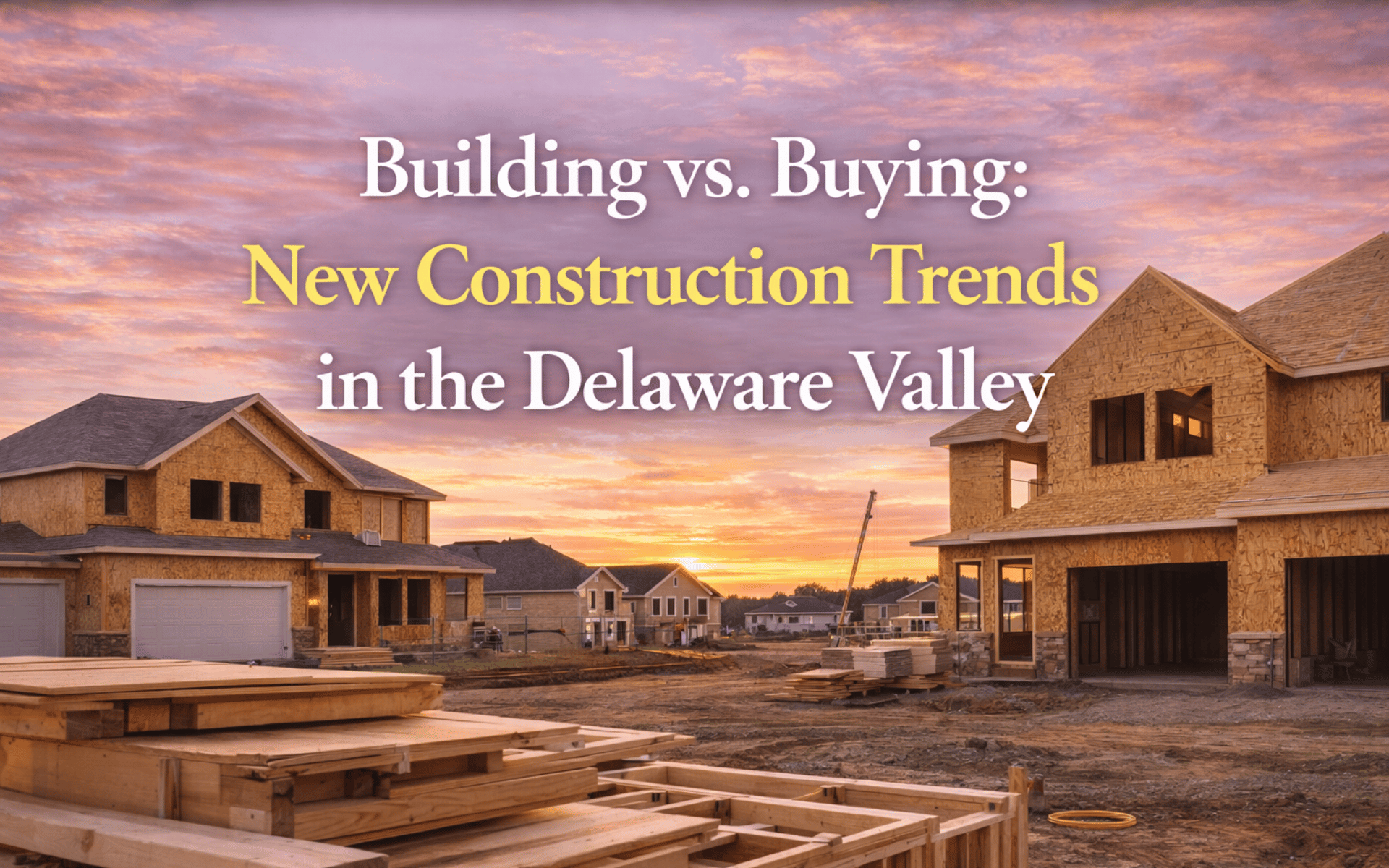
If you're planning a move in 2026, one of the biggest questions you may be facing is:
Should I build a new home—or buy an existing one?
Across the Delaware Valley, this debate has become more relevant than ever. With resale inventory still constrained and builders adjusting to buyer demand, new construction is playing a major role in today's housing market.
But building isn't always better—and buying isn't always faster or cheaper. Understanding the real trade-offs in 2026 can help you make a smarter decision for your lifestyle, timeline, and finances.
Let's break down what's happening with new construction in the Delaware Valley and how buyers should think about building vs. buying this year.
Why New Construction is Gaining Momentum in 2026
New construction activity has increased across many parts of the Delaware Valley, particularly in suburban growth corridors.
Key drivers include:
- Ongoing resale inventory shortages
- Buyers wanting modern layouts and energy efficiency
- Builders offering incentives to attract qualified buyers
- Demand for move-in-ready homes
In 2026, builders are no longer selling homes sight unseen—but they are competing more strategically.
Where New Construction is Most Active
New construction trends vary by location.
Across the region, activity is strongest in:
- Chester County (Malvern, Downingtown, West Chester outskirts)
- New Castle County (Middletown, Odessa, Bear)
- Outer-ring Philadelphia suburbs with available land
Urban cores remain more limited, while suburban areas with infrastructure capacity continue to grow.
The Case for Building a New Home
Pros of Building in 2026
1. Modern Design & Efficiency
New homes are built for how people live today:
- Open floor plans
- Home offices and flex spaces
- Energy-efficient systems
- Smart home features
Lower maintenance and utility costs are a major draw.
2. Incentives From Builders
In 2026, many builders are offering:
- Mortgage rate buydowns
- Closing cost credits
- Design upgrades
- Flexible deposit structures
These incentives can sometimes offset higher base prices.
3. Less Immediate Competition
Buying new construction often means:
- No bidding wars
- Predictable pricing
- Less emotional competition
For buyers tired of losing out on resale homes, this is appealing.
The Downsides of Building
Building isn't for everyone—and it comes with real considerations.
Cons of Building in 2026
1. Time & Delays
Even in improved conditions, construction can take:
- 6–12+ months
- Longer with supply chain or weather delays
Buyers on tight timelines may struggle.
2. Higher Base Pricing
New construction often comes at a premium due to:
- Labor costs
- Material pricing
- Land scarcity
Upgrades can quickly add to the final price.
3. Less Location Variety
Most new construction is:
- In developing areas
- Further from established town centers
- Subject to HOA rules
Buyers prioritizing walkability or historic charm may find options limited.
The Case for Buying an Existing Home
Pros of Buying Resale in 2026
1. Established Neighborhoods
Resale homes often offer:
- Mature landscaping
- Walkable communities
- Proximity to schools, transit, and downtowns
For many buyers, location still outweighs newness.
2. Faster Move-In Timelines
Buying an existing home usually means:
- Closing in 30–60 days
- No construction delays
- Immediate occupancy
This matters for relocations and life changes.
3. More Negotiation Power Than Past Years
In 2026, buyers are regaining:
- Inspection contingencies
- Repair negotiations
- Seller credits
This wasn't possible just a few years ago.
The Downsides of Buying Resale
1. Limited Inventory
The lock-in effect continues to restrict listings, especially in:
- Top school districts
- Mid-priced family homes
- Well-maintained properties
Good homes still move quickly.
2. Older Systems & Maintenance
Resale homes may require:
- Roof or HVAC replacements
- Cosmetic updates
- Ongoing maintenance
Buyers must budget accordingly.
Cost Comparison: Building vs. Buying in 2026
While every situation is different, here's how costs typically compare:
- New construction: Higher purchase price, lower immediate maintenance
- Resale homes: Lower entry price, higher near-term upkeep
The real question isn't just price—it's total cost of ownership over time.
Financing Differences Buyers Should Know
Financing new construction can differ from resale:
- Construction-to-permanent loans may be required
- Rate locks may be limited during build time
- Appraisals are based on final completion
Resale purchases generally offer more straightforward financing options.
Which Option Makes Sense for You?
Building May Be Right If:
- You value modern design and efficiency
- You're flexible on timing
- You're comfortable with new neighborhoods
- You want predictability over competition
Buying May Be Right If:
- Location is your top priority
- You need to move quickly
- You want character and established communities
- You prefer seeing the finished product before buying
2026 Buyer Strategy: Flexibility Wins
Many successful buyers in 2026 are:
- Comparing resale and new construction simultaneously
- Using builder incentives strategically
- Staying flexible on neighborhoods and timelines
The best outcomes come from options, not assumptions.
Final Thoughts: There's No One-Size-Fits-All Answer
In the Delaware Valley, both building and buying can make sense in 2026—but only when aligned with your goals.
New construction offers efficiency and incentives.
Resale homes offer location and immediacy.
The smartest move is understanding both—and choosing the path that supports your lifestyle, budget, and long-term plans.
Need Help Comparing New Construction vs. Resale?
If you're weighing whether to build or buy in the Delaware Valley, I can help you:
- Compare costs realistically
- Identify active new construction communities
- Evaluate resale opportunities
- Build a timeline that fits your life