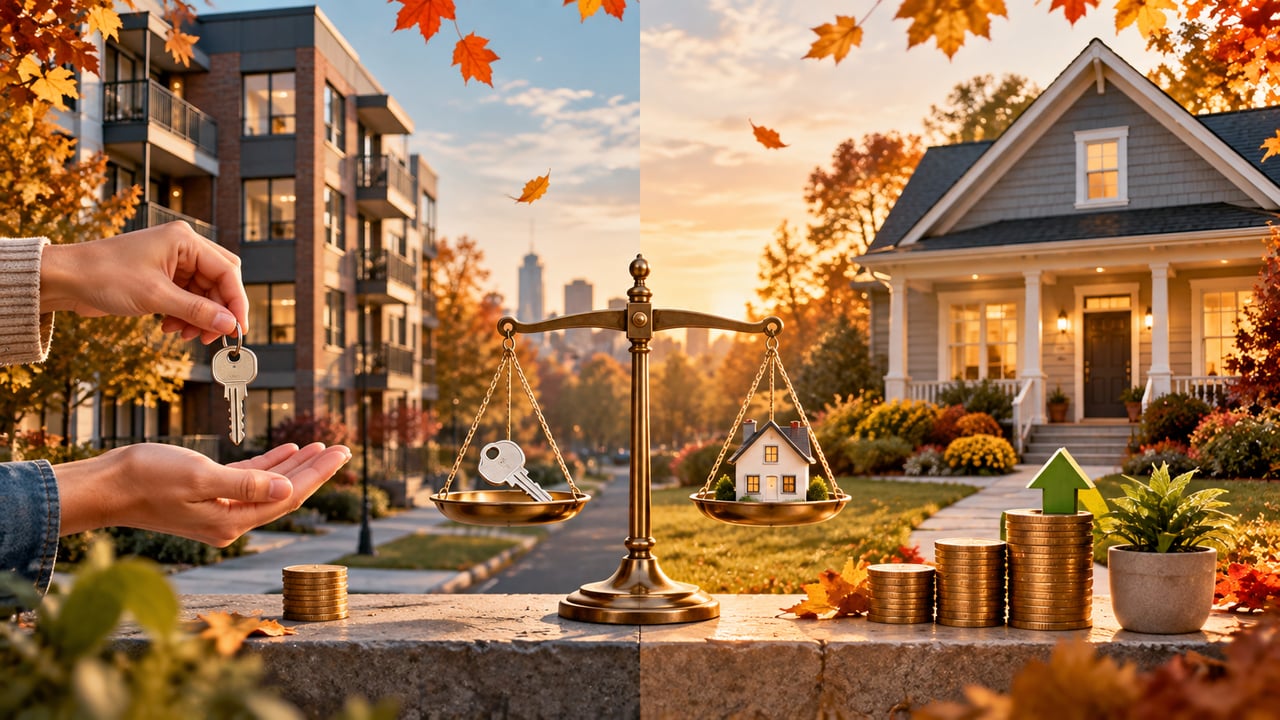
It's the question almost every prospective homeowner is asking right now: with mortgage rates where they are, does it still make sense to buy — or is renting the smarter move in 2026?
The honest answer: it depends on you. Rent vs. buy isn't a one-size-fits-all decision, and anyone who tells you "always buy" (or "always rent") is selling something. So let's look at it clearly and fairly — the real costs, the key questions, and how the Delaware Valley factors in.
(This is general information, not financial advice. Everyone's situation is different — run your own numbers and consult a lender and financial professional.)
📊 The 2026 Backdrop
A quick reality check on the market:
✔️ Mortgage rates have hovered in the mid-6% range — higher than the pandemic era, which raises the monthly cost of buying
✔️ Prices have normalized — still rising slowly in most Pennsylvania suburbs, more buyer-friendly at the Delaware beaches, and genuinely affordable in pockets like Delaware County and Cecil County
✔️ Rents remain high — years of strong demand have pushed rents up across the region, too
So this isn't a simple "buying is expensive, so rent" story. Both paths cost real money in 2026 — the question is which one builds your wealth and fits your life.
🏠 The Case for Buying
Owning has real, lasting advantages:
✔️ You build equity — every payment chips away at your loan and builds ownership, instead of going to a landlord
✔️ Predictable housing costs — a fixed-rate mortgage stays put, while rents tend to climb year after year
✔️ Appreciation — over time, real estate has historically grown in value, building wealth
✔️ Tax and ownership perks — potential mortgage-interest deductions, plus Delaware's low property taxes and no sales tax on the DE side of the line
✔️ Stability and freedom — you can renovate, put down roots, and truly make it yours
✔️ "Marry the house, date the rate" — you can buy the home now and refinance later if rates fall
The catch: buying takes more upfront cash and commitment, and you're responsible for maintenance and repairs.
🔑 The Case for Renting
Renting isn't "throwing money away" — for many people, in many seasons of life, it's genuinely the right call:
✔️ Flexibility — ideal if you might move within a couple of years for a job, family, or life change
✔️ Lower upfront cost — a security deposit instead of a down payment and closing costs
✔️ No maintenance responsibility — the landlord handles repairs, and there's no surprise roof or HVAC bill
✔️ Predictable short-term budgeting — no property taxes, homeowners insurance, or capital expenses on you
✔️ Time to prepare — a chance to save, build credit, and learn a new area before committing
The catch: you're not building equity, and your rent can rise at renewal.
💰 The True Costs — On Both Sides
The most common mistake is comparing rent to a mortgage payment alone. That's not apples to apples. Here's the fuller picture:
Buying costs include:
✔️ Down payment and closing costs (which vary by state — Delaware's transfer tax is notably higher up front, though first-time buyers get relief)
✔️ Principal, interest, property taxes (hugely variable by town and district), and homeowners insurance
✔️ Maintenance and repairs — a common rule of thumb is budgeting around 1% of the home's value per year
✔️ HOA or condo fees, where applicable
Renting costs include:
✔️ Monthly rent (which typically rises over time) and renters insurance
✔️ A security deposit and possible fees
The key insight: buying front-loads the costs (down payment, closing) but can pay off over time, while renting is cheaper to start but builds no equity. Which wins depends heavily on how long you stay.
⏱️ The Break-Even Question
Here's the single most useful lens: how long do you plan to stay?
Because buying carries significant upfront costs, it generally takes a few years of ownership before you come out ahead of renting — the point where equity and appreciation outweigh those transaction costs. That's your "break-even horizon."
A simple way to think about it:
✔️ Staying only a year or two? Renting often wins — you may not own long enough to recover the upfront costs
✔️ Planning to stay five-plus years? Buying usually pulls ahead, as equity builds and costs are spread out
✔️ Somewhere in between? It's genuinely close — and depends on the specific home, rate, price, and rent
There's no universal number, but the longer your horizon, the more buying tends to make sense.
🗺️ How the Delaware Valley Factors In
Our region actually offers unusual flexibility for this decision:
✔️ A wide range of price points — from affordable, buy-friendly markets (Delaware County, Cecil County, western Chester County) to premium ones (the Main Line, Chateau Country) means there may be a buy option that fits your budget
✔️ Tri-state tax differences — Delaware's low property taxes and no sales tax can meaningfully lower the cost of owning, tilting the math toward buying on the DE side
✔️ Strong long-term fundamentals — a diverse economy and Northeast-corridor location support steady, long-run home values
✔️ Robust rental options too — from Wilmington Riverfront apartments to suburban rentals, if renting is right for now
In other words, the "right" answer can change just by crossing a county or state line — which is where local guidance really helps.
🧭 Questions to Ask Yourself
Skip the generic advice and answer these honestly:
✔️ How long will I stay? (The biggest factor by far.)
✔️ Do I have stable income and a down payment — without draining my safety net?
✔️ Is my credit ready for a competitive mortgage rate?
✔️ Do I want the responsibility of maintenance, or the freedom of flexibility?
✔️ What does buying cost vs. renting for the specific homes I'd actually consider?
✔️ Could I buy now and refinance later if rates ease?
Your answers — not a headline — should drive the decision.
⚖️ The Bottom Line
In 2026, both renting and buying can be smart moves in the Delaware Valley — it truly depends on your timeline, finances, and goals.
Rent if you value flexibility, need time to prepare, or won't stay long. Buy if you're ready to put down roots, you'll stay several years, and you want to build equity and lock in your housing costs — especially in the region's more affordable pockets or on the tax-advantaged Delaware side.
The smartest first step isn't a leap either way — it's running the real numbers for your situation. I'm happy to help you compare a specific rent scenario against real homes you could buy, and connect you with a trusted lender to pressure-test the math. No pressure, just clarity.
If you're weighing rent vs. buy, let's talk it through. 🏡
🏡 Your Next Move Starts Here.
Jim Arcidiacono, REALTOR®
Next Move Delaware Valley | KW Empower
Licensed in PA • DE • MD | Nationwide Referral Partner
🌐 www.delawarevalleyrealestate.com