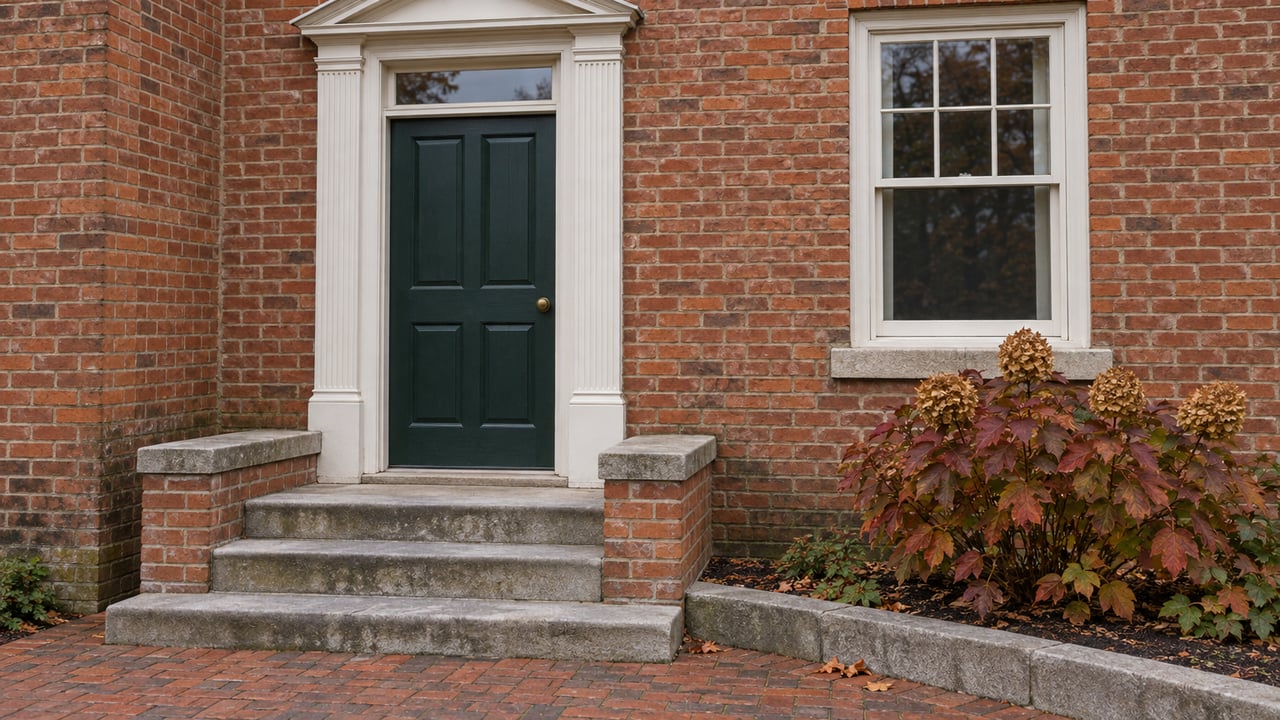
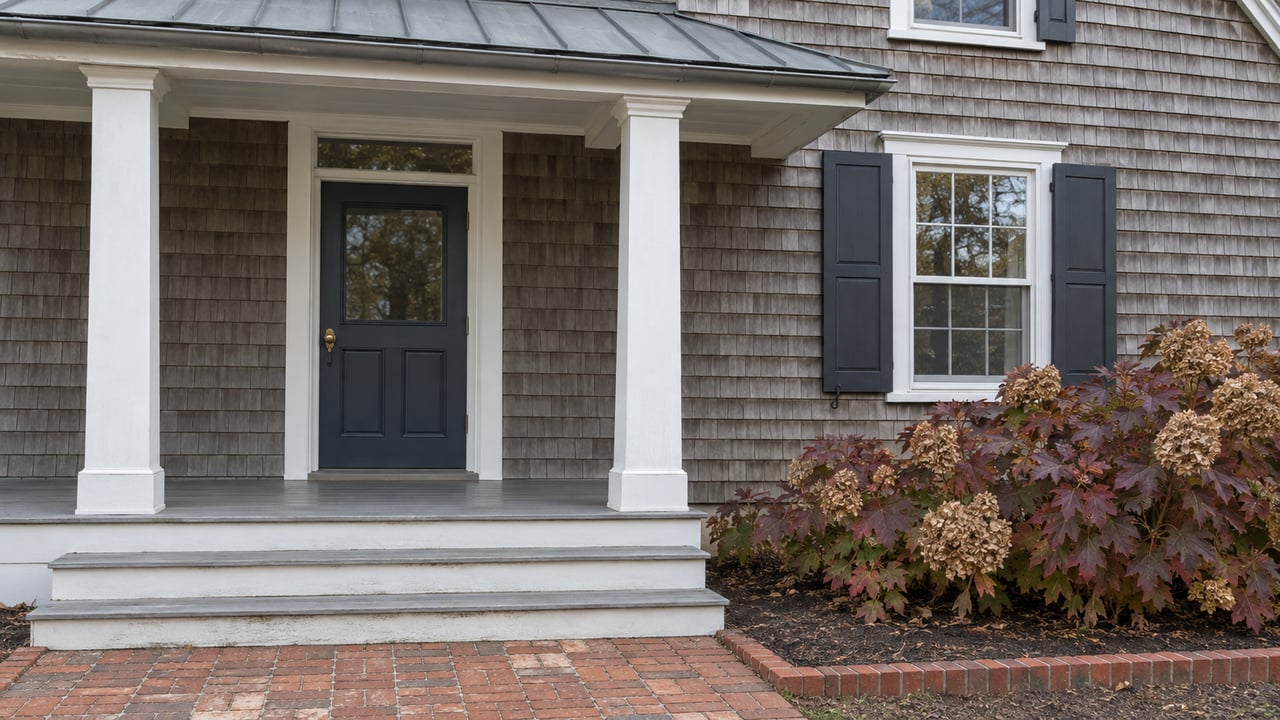
A buyer's negotiated discount shows how uncertainty about rental rights can affect a property's price.
That uncertainty comes from a rule, not from the house. In Lewes, a garage apartment or guest cottage on the same lot as the main home can be an income source or a family room with a kitchenette. Which one it is now depends on City paperwork tied to one date: January 1, 2027. That date is less than three months away. Two lots on the same street can look the same in listing photos and still carry very different rights.
What council settled in May
On May 19, 2026, Lewes Mayor and City Council voted unanimously to adopt Ordinance 2-26. It amended the ADU rules the city first passed in September 2024. The adopted ordinance text requires the property owner to live in either the main house or the ADU as a principal legal residence. It also requires one extra off-street parking space, bars subletting, and says an ADU "shall not be used as a short-term rental."
The compromise is in subsection 14. An ADU in existence as of January 1, 2027, "as evidenced by City rental licensing records," is exempt from three of those rules: owner occupancy, the extra parking space, and the short-term rental ban. The exemption lasts only while the owner keeps a valid City rental license for each calendar year. Go two consecutive calendar years without one and the exemption ends for good.
Mayor Amy Marasco described it as "a carve-out to address a city practice where these properties had been approved." She added, "it's not a gold rush to go and build an ADU."
Three lots that look the same
The ordinance in effect sorts Lewes ADUs into three groups. A buyer touring two-unit properties this fall could see all three in one afternoon.
| The second unit is... | Owner must live on site | Short-term rental allowed | Extra parking space required |
|---|---|---|---|
| In City rental licensing records by Jan. 1, 2027, with the license renewed every year | No | Yes, under the exemption | No |
| An existing unit whose license lapsed for two consecutive calendar years | Yes | No | Yes |
| Built after Jan. 1, 2027 | Yes | No | Yes |
The Cape Gazette reported that City Solicitor Alex Burns confirmed after the vote that the residency requirement applies after January 1, 2027 whether or not the unit is rented. That matters for a part-time owner who never planned to rent. If the unit has no exempt status, owning the property means living there as a principal residence.
The first group is also small, and nobody knows exactly how small. The 2024 ordinance capped new ADU permits at 40 in the first year so city staff wouldn't be swamped, and the Cape Gazette reported in January that the feared flood of applications hadn't happened. Councilman Tim Ritzert said in January that "property owners have not come in and registered." A former city planner had estimated the number of illegal ADUs operating at "in the multiples of 10." No public count of licensed ADUs turned up in our research. Many recent applications seen by building official Jon Ward are for intergenerational living or visiting family, not rentals, according to Burns.
The question the ordinance leaves open on purpose
Here a real gap opens between the listing and the closing. The exemption is written around "the property owner" keeping a license. It does not say whether the exemption carries over to a new owner when the property sells.
Dede Haas, who has had an ADU on her property since 1998, raised the issue right after the vote:
"There is no place in the ordinance that says that it will convey when the property is sold, nothing on the books that says you can do this."
Burns said the ordinance leaves transferability out on purpose. Other sections of the code on conditional uses don't address it either, and he did not want to create confusion.
So a seller can truthfully say the cottage has been licensed and rented, and a buyer still can't treat that income as transferable without confirming with the City. That uncertainty affects what buyers are willing to pay. Realtor Lee Ann Wilkinson, who pushed for changes, argued that buyers in this market are mostly "people who want to use the house and get some rental income," not pure investors. For that buyer, the unit's legal status is a large part of what they are paying for.
The two-year lapse rule also cuts the other way. A seller who let the license go in, say, 2027 and 2028 would lose the exemption before a buyer ever made an offer. The renewal history matters as much as the original license.
What the rental income is worth after taxes and fees
When the exemption applies, the next question is what the rental actually brings in. Lewes layers its own charges on top of the state's.
Since January 1, 2025, Delaware has charged a 4.5% tax on rent for short-term residential stays of 31 consecutive nights or fewer. When a booking platform such as Airbnb or Vrbo handles the stay, the platform collects and remits that tax. An owner who books guests directly has to collect it, hold a $25 state license, and file returns by the 15th of the following month. The Division of Revenue FAQ says cleaning and linen fees, security deposits, and municipal taxes are not part of taxable rent.
The City's gross receipts rental tax ordinance sets its tax at 5% on stays of 30 days or less. That brings the combined rate to 9.5% today. On May 12, 2025, council unanimously voted to raise the City's portion to 5.5%, taking effect January 1, 2028. Under the certified ordinance, rental agreements signed before that date are exempt from the half-point increase. A summer 2028 week booked and signed in 2027 would stay at the lower City rate. The ordinance makes the owner responsible for paying the City tax, though the owner can designate an agent to collect it.
The City's April 2025 fee schedule lists the other costs:
- A $200 annual residential rental license per unit
- A warning for a first rental-license violation, $250 for a second, and $500 plus a 12-month license suspension for a third
That last line connects back to the ADU exemption, which depends on holding a valid license every calendar year. A buyer counting on exempt status should ask the City how a suspension would count against the two-year lapse rule.
Owners felt the existing load before the vote. At the April 7, 2025 public hearing, Mina Clark, who rents out a property on Cedar Street about a block from Lewes Beach, said 40% of what she charges a guest goes to taxes and fees.
The carrying costs the rental is supposed to offset
Sussex County's court-ordered reassessment reset values to projected fair market value as of July 1, 2023. For the July 2026 to June 2027 tax year, the combined county and Cape Henlopen school rate is $0.2104 per $100 of assessed value. City of Lewes property tax comes on top of that. The City's April 2025 fee schedule lists it at $0.57 per $100 of one-half assessed value.
Rates stayed nearly flat, but some bills did not. WDEL reported a Bay Avenue property in Lewes, assessed at $3.46 million, whose bill rose from $1,079 to $6,822. Under the old assessments, a long-held property's carrying costs may have looked low. Post-reassessment bills are the figures to plug into any rental projection.
Buyers have more room to do this checking than they did a year ago. Across Sussex County in August 2026, active inventory was 2,781 homes, up 10.1% year over year. Average days on market was 75, ten days longer than a year earlier, and the median sale price was $439,995, according to the Delaware News Journal. Those are countywide figures, not Lewes-specific, but they point to a market where a buyer can ask for licensing records before committing.
What to confirm before an offer on a two-unit lot
- Licensing record. Ask the seller for the City rental license history on the ADU, year by year, and confirm it with the City.
- Renewal timing. Ask whether the unit will appear in City rental licensing records as existing by January 1, 2027, if the closing falls near that date.
- Transfer. Ask City Planning and Building in writing whether the exemption would apply to you as the new owner, since the ordinance does not say.
- Your own residency. If the exemption won't carry over, settle whether you would live there as a principal residence, because that is the rule after January 1, 2027, whether or not you rent the unit.
- Tax math. Build projections on 9.5% for stays of 30 days or less signed before 2028, and 10% for agreements signed after.
- Post-reassessment bill. Request the current Sussex County and City of Lewes tax bills, not figures from before the reassessment.
None of this is legal or tax advice. Lewes City Hall and a Delaware real estate attorney are the right sources for a final answer on any specific property.
A few common questions
Does Lewes ban short-term rentals?
No. Ordinance 2-26 bars short-term rental use of ADUs that are not exempt. It is not a citywide ban.
Does the hotel lodging tax apply to a rented house?
No. Lewes's separate lodging tax covers hotels, motels, and tourist homes, phasing to 2% by 2028. Private short-term rentals pay the gross receipts rental tax instead.
Will Airbnb start collecting the City tax?
Not yet. House Bill 474 would require booking platforms to collect and remit local short-term rental taxes starting January 1, 2027. As of our research it was still in a House committee and not law.
If you're looking at a Lewes property with a guest cottage or garage apartment, Next Move Delaware Valley can help you collect the licensing history, line up the right questions for the City, and build the numbers before you make an offer. Let's Find Home.