As The Hunt Magazine quoted the late Paddy Neilson: "Open space is the lifeblood of fox hunting."
That line still holds for the three days that will define the first weekend of October here. From October 2 through 4, the Unionville Community Fair takes over the grounds behind Landhope Farms on East Street Road, and for its 102nd year running, the fair will do something most agricultural fairs stopped doing decades ago: share its fence line with a hound demonstration.
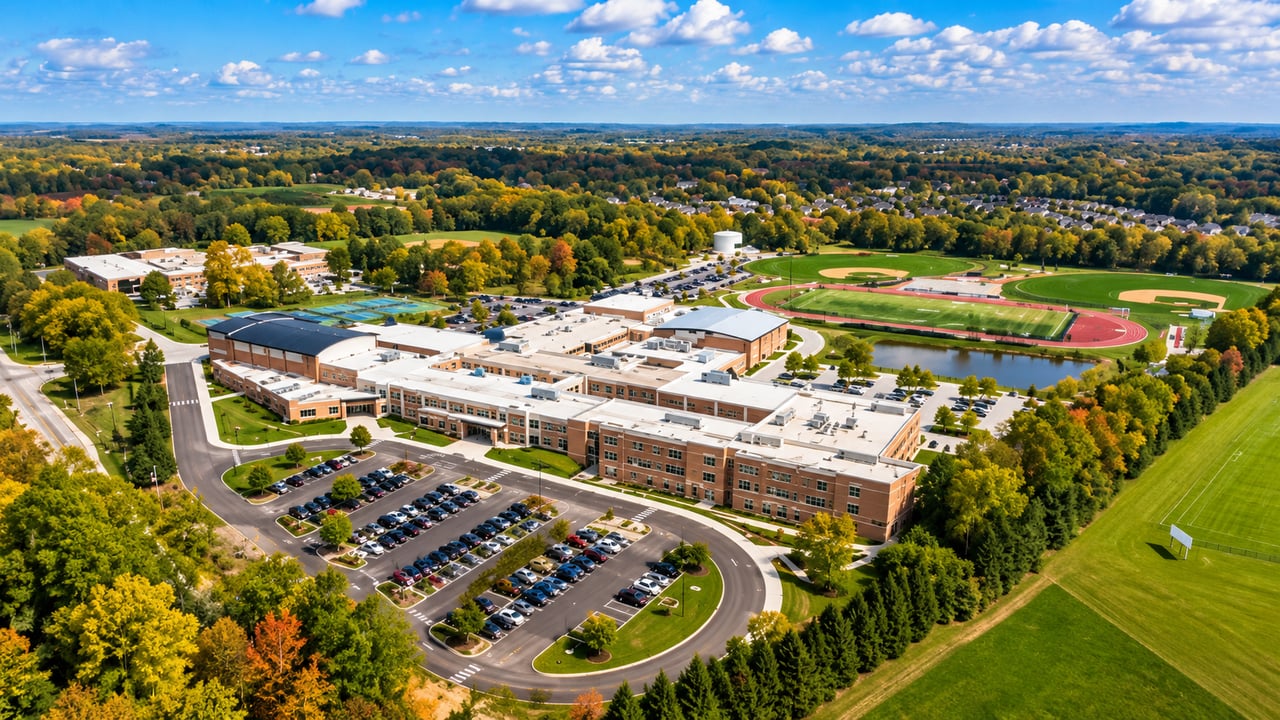
Most people who drive past the fairgrounds this weekend will see the obvious version of the event. Tractors. A dairy cattle competition. A Fair Queen and her Court parading across the grounds before a presentation on the main stage. What they might not clock is that on the other side of the fence, near the Paddock, the Cheshire Hunt Conservancy will be running its own demonstration, hounds, huntsman, and the whip, on the same acreage the fair uses for its tractor parade. That overlap is not a scheduling coincidence. It is the plainest evidence you will get all year that Unionville's two defining identities, the agricultural fair crowd and hunt country, are still operating on the same ground because someone spent a century making sure the ground stayed available.
The Fair Sits on Ground the Hunt Fought to Keep Open
Mr. Stewart's Cheshire Foxhounds, the formal name behind the Cheshire Hunt Conservancy, was established in 1912 and recognized in 1913, and it has been headquartered in Unionville ever since. The organization's own stated purpose, filed with the IRS, is blunt about it: preservation of open space, fox hunting, and outdoor activities, in that order. The land itself has a documented history. As The Hunt Magazine recounts, W. Plunket Stewart bought the original parcel in the early 1900s, and he later convinced Robert Kleberg of Texas's King Ranch to acquire a nearly 6,000-acre holding from the du Pont family rather than see it broken up. Decades later, the Brandywine Conservancy worked with landowner George A. Weymouth to place easements across large stretches of that same countryside, locking in the open fields that make both fox hunting and a tractor parade possible in the first place.
That is the part of fair week that never makes it onto a flyer. The Unionville Community Fair can run a gravel-drive tractor parade starting from the Route 82 entrance because the field it uses has been protected, piece by piece, since before either the fair or most of its current attendees existed. The hound demonstration at the Paddock is not a novelty act tacked onto the schedule. It is the same conservation story the fairgrounds itself depends on, just told with animals instead of machinery.
What's Actually on the Grounds This Year
The 2026 fair runs Friday, October 2 from 4 to 8 p.m., Saturday, October 3 from 10 a.m. to 8 p.m., and Sunday, October 4 from 10 a.m. to 4 p.m. A few specifics worth knowing before you go:
- The community tailgate kicks off the weekend on Thursday night with music and food, and the headline act is now a band called Last Minute Changes after a late lineup swap.
- Free face painting runs all three days near the Kiddie Corral Tent, staffed by volunteers from Unionville High School's National Arts Honor Society.
- Boston Bachert's variety shows, juggling, illusions, magic, circus stunts, the Cyr wheel, run next to the Main Stage all weekend.
- The Beer and Wine Garden opens Friday at 6 p.m.
- The dairy cattle competition and the tractor parade both run as long-standing fixtures of the fair, alongside a $1,000 raffle-style contest sold by volunteers and the Fair Queen's Court at the Information Tent.
- After entry pickup, the Exhibit Barn holds a bidding session on donated items, mushrooms, flowers, cakes, whatever came in that year.
None of this requires advance planning beyond showing up. The fair is built for walking in cold and figuring out the schedule from the posted board near the Main Stage.
Where the Fair Crowd Eats
Fair week also happens to land during the same stretch when Unionville's small restaurant scene is easiest to justify a stop at, whether that's dinner before the Thursday tailgate or breakfast before heading back for Saturday's full slate.
Sovana Bistro has been a fixture for the Unionville community for twenty years now, evolving from a neighborhood spot into what its own kitchen calls a genuine dining destination. RE Farm Cafe at Windswept Farm leans into the same agricultural backdrop as the fair itself, built around a working farm rather than a strip of storefronts. Four Ways Pub & Eatery and The Junction 144 cover the more casual end of the same corridor, and Bonfatto's Italian Market and Corner Cafe does double duty, Italian market by day, breakfast counter for anyone trying to beat the Saturday fair crowd through the gate.
None of these are new discoveries. They are the same names that come up when anyone local is asked where to eat before or after a Saturday at the fairgrounds, and that consistency is its own kind of answer. A town this size does not need a rotating restaurant scene when the handful of places it has are already doing the job.
The Field Stays Open Because Weeks Like This Exist
Fair week works because the ground under it has stayed exactly what it was a century ago: open, unpaved, and shared by whoever needs it that weekend. The tractor parade and the hound demonstration are not two separate events that happen to fall on the same calendar. They are the same argument, made twice, about what this stretch of Chester County is for. Neilson's line about open space being the lifeblood of fox hunting works just as well for a dairy cattle competition. Both depend entirely on the field still being there.
If Unionville's fair week is your first real look at what this stretch of Chester County actually is once you get past the postcard version, Next Move Delaware Valley knows these back roads well enough to point you toward the next one worth circling on the calendar.